
Zero-Waste Cooking: How to Use Every Part of Your Groceries
- The Myth of the ‘Throwaway Peel’
- Stocks Aren’t Just for Chefs — They’re Your Waste Safety Net
- Root-to-Stem Isn’t a Trend — It’s Basic Kitchen Math
- Freezer Logic: When to Freeze, When to Ferment, When to Forget
- Meal Planning That Actually Prevents Waste (Not Just Schedules It)
- Common Questions
- Final Thoughts
Most “zero waste cooking” posts start with compost bins and glass jars. Which is like handing someone a fire extinguisher before you’ve even lit the stove. The real issue isn’t gear — it’s standing in your kitchen at 6:13 p.m., staring at half a lemon and a handful of limp kale, wondering if saving the rind is worth the mental energy or just another guilt trip waiting to happen. Sustainable cooking doesn’t mean hitting zero. It means building habits that stick — like tossing carrot tops into the blender without thinking, or freezing herb stems before you even question why. That’s how kitchen sustainability becomes reflex, not ritual.
The Myth of the ‘Throwaway Peel’
You don’t need a dehydrator to use citrus peels. Just a microplane and 90 seconds. Lemon, lime, and orange rinds pack more aromatic oils — and way more flavor — than the juice inside. Grate them over roasted fish, fold into butter for toast, or steep in hot water for a bright, caffeine-free lift. Potato skins? Toss them in olive oil, roast at 400°F for 12 minutes, and eat like chips — they’re higher in fiber and potassium than the flesh itself. Broccoli stems? Most people peel and trash them. Big mistake. Shave them raw into salads for crunch, or roast until caramelized — they turn sweet, tender, and deeply savory. Here’s what no one says out loud: the parts we call “waste” are often where the nutrients concentrate. Kale stems aren’t tough — they’re fibrous. And fibrous means slower-digesting carbs, prebiotics for your gut, and minerals that actually absorb better when cooked low and slow. Treat them like asparagus stalks — not garbage.
Stocks Aren’t Just for Chefs — They’re Your Waste Safety Net
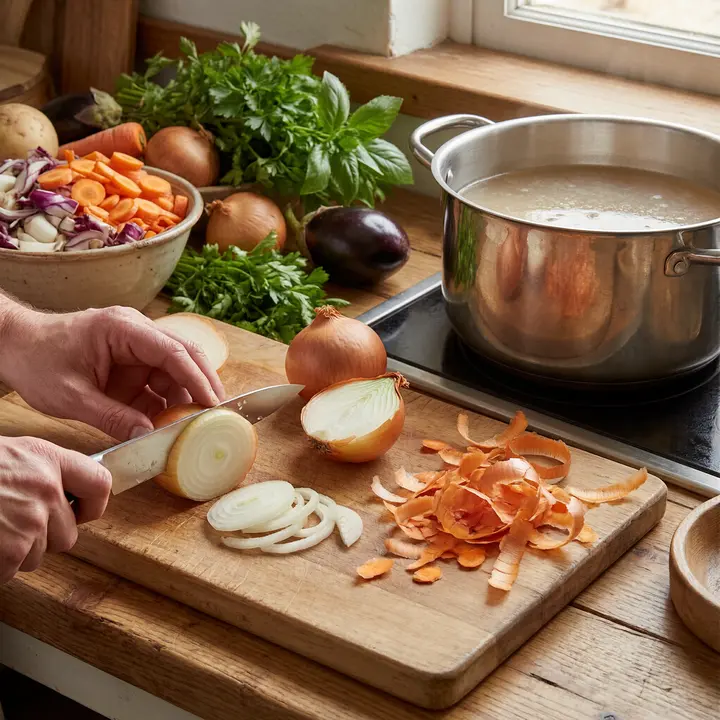
A good stock is your edible insurance policy. Not the kind chefs simmer for hours while wearing linen aprons — the kind you build quietly, bag by freezer bag, from scraps you’d normally rinse down the drain. Onion skins (yes, the papery brown ones), mushroom stems, celery leaves, herb stems, even slightly wilted spinach — all go in. No deep scrubbing needed — just shake off the grit. Freeze scraps in labeled bags (“veggie,” “meat bones,” “herb stems”) until you hit about 4 cups. Then simmer 45 minutes, strain, and freeze in 1-cup portions. This isn’t fancy. It’s kitchen math made practical: one batch replaces three bouillon cubes (which cost $3.50, pack 800mg sodium, and come wrapped in plastic). And since it’s built from what you already have, it costs nearly nothing. Think of it as emergency savings — pulled out when dinner feels impossible, or when you want to stretch a $4 chicken breast into three meals without sacrificing flavor, nutrition, or your sanity.
Root-to-Stem Isn’t a Trend — It’s Basic Kitchen Math
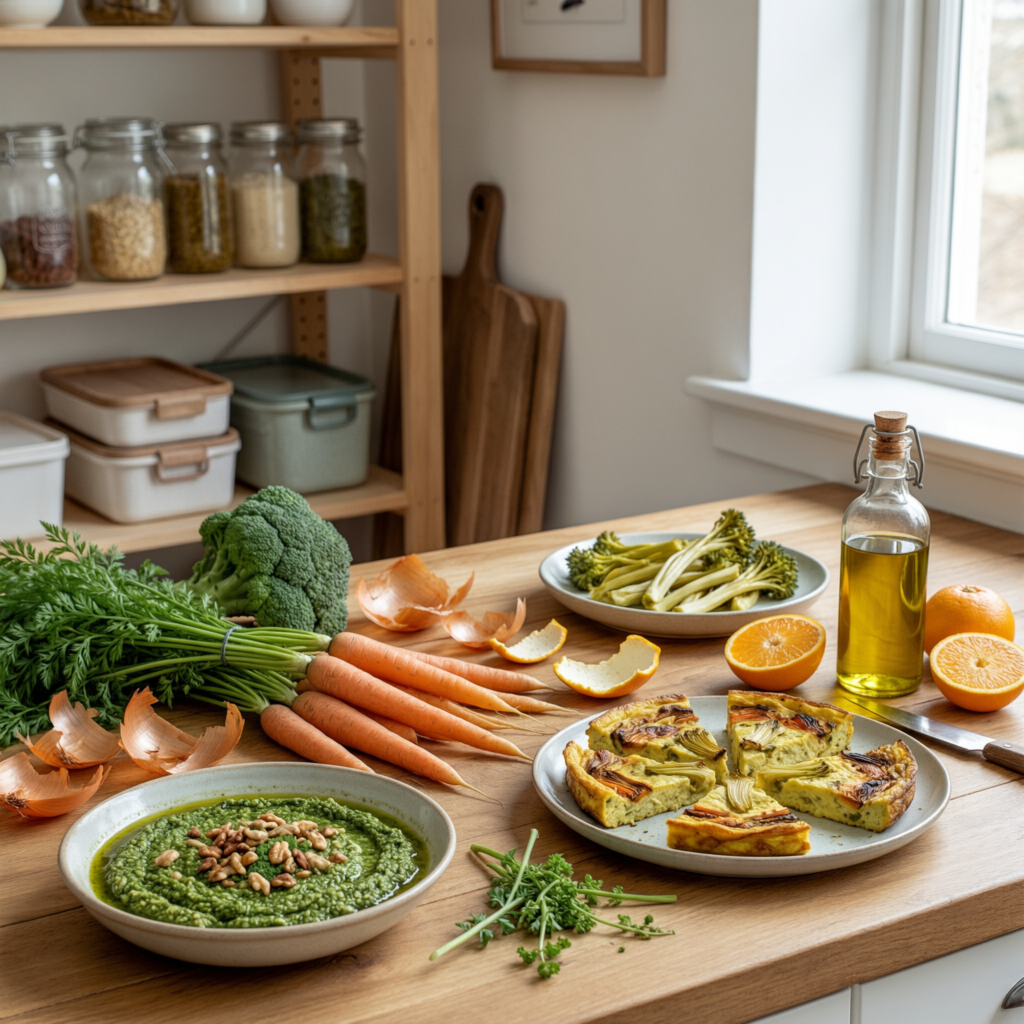
“Root-to-stem” sounds like something said while holding a fennel bulb under soft lighting. In practice? It’s simple arithmetic. One bunch of cilantro = roughly 1/3 leaves, 2/3 stems and roots. Those stems? Finely chopped, they add sharp anise notes and crunch to salsas, grain bowls, and pesto (swap 30% of your basil for cilantro stems — seriously, try it). Beet greens cook faster than spinach and taste like Swiss chard’s earthier, bolder cousin — sauté them with garlic and a splash of apple cider vinegar. Pineapple cores — usually hacked off and tossed — blend smoothly into breakfast smoothies (they’re rich in bromelain, an enzyme that helps digestion) or simmer into tangy syrup for oatmeal or cocktails. Sustainable cooking isn’t about eating things you dislike. It’s about noticing how texture, flavor, and function shift across a plant — and using those shifts to your advantage. Carrot top pesto doesn’t taste like basil pesto — it’s grassier, sharper, faintly bitter — and that’s exactly why it works.
Freezer Logic: When to Freeze, When to Ferment, When to Forget
Freezing isn’t all-or-nothing — it’s strategic. Bread heels? Straight to the freezer — toast them later for croutons or breadcrumbs. Cooked rice or quinoa? Portion into silicone muffin trays, freeze into “grain cubes,” and drop them straight into soups or stir-fries. Herbs? Don’t freeze whole sprigs — they’ll turn to sad green mush. Chop, mix with olive oil, freeze in ice cube trays. Same trick works for tomato paste: freeze in tablespoon portions so you can toss one into a pan without thawing first. Fermentation is the quiet workhorse of kitchen sustainability — especially when you’ve got too much of something. A quick pickle of radish greens lasts 3 weeks in the fridge and adds serious zing to sandwiches or grain bowls. Overripe bananas? Mash, portion, freeze — then blend into banana-oat pancakes or “nice cream.” But here’s the unvarnished truth: some things shouldn’t be saved. Slimy lettuce, moldy berries, meat past its date — freezing won’t fix safety. Zero waste cooking isn’t hoarding. It’s knowing when preservation pays off — and when composting is the smarter, safer move.
Meal Planning That Actually Prevents Waste (Not Just Schedules It)
Most meal plans fail because they treat food like inventory — rigid, predictable, static. Real-life sustainable cooking needs flexibility built in. Start with what’s already in your fridge: that half-bag of spinach, the bell pepper losing its snap, the last ¼ cup of lentils. Build one “use-it-up” meal around those — say, a frittata, grain bowl, or hearty soup — then plan the rest of the week *around* that anchor. Use apps like BigOven or even a Notes doc to track “what’s aging,” not just “what I bought.” Rotate proteins so older items get used first (chicken thighs before breasts, ground turkey before whole cuts). And bake wiggle room into your grocery list: instead of “2 cucumbers,” write “1–2 cucumbers + 1 zucchini.” That tiny shift gives you backup options when one veg starts looking tired. Budget cooking and eco friendly kitchen habits aren’t competing goals — they’re the same logic, just measured in different units. One saves money. The other saves resources. Both rely on seeing food as a connected system — not a collection of isolated ingredients.
Common Questions
Can I really use citrus peels safely — won’t pesticides stick to them?
Yes — but only if you buy organic citrus or give conventional fruit a serious scrub: soak in warm water with 1 tablespoon baking soda per cup for 2 minutes, then rinse well. Non-organic peels can trap pesticide residue and wax coatings, so skip non-organic zest for cooking or infusions — save it for garnish only, and even then, think twice.
What’s the easiest zero waste recipe for beginners who hate cooking?
Roasted vegetable scrap broth: toss onion ends, carrot peels, celery leaves, and herb stems onto a sheet pan, roast at 425°F for 25 minutes until deeply browned, then simmer with 6 cups water for 30 minutes. Strain, cool, and freeze. Takes 10 minutes of hands-on time, uses what you’d throw away, and delivers deep, savory flavor — no chopping, no timing, no special tools required.
Does zero waste cooking actually save money — or is it just extra work?
It saves money — but not right away. Give yourself 3–4 weeks to adjust. You’ll stop buying duplicate items (like broth, croutons, or pre-chopped herbs), and spoilage drops fast. After that, most households shave $25–$45 off their monthly food budget — mostly from fewer impulse buys, less rotting produce, and turning scraps into full meals instead of paying for convenience versions.
Final Thoughts
Zero waste cooking isn’t about hitting zero. It’s about closing the gap between what you *intend* to do and what you *actually* do in the moment — tired, hungry, and short on time. Keep a small bowl on your counter for peels and stems. Freeze scraps before you rinse them. Taste the stem before you toss it. That’s how sustainable living becomes second nature — not another thing to optimize, schedule, or stress over.
zero waste cooking, food waste reduction, sustainable cooking, eco friendly kitchen, leftover recipes, budget cooking, kitchen sustainability, green lifestyle, sustainable living, meal planning, zero waste recipes, healthy cooking